Ethics and Professional Deontology

Since 2025 I have served as president of the Ethics and Deontology Committee of the Official Association of Environmental Scientists of Catalonia, the body responsible for ensuring the proper professional practice of more than one thousand registered scientists, managers, and environmental technicians in Catalonia.
The exercise of this responsibility consists of coordinating a team made up of legal philosophy consultants and professional committee members, drafting opinions, interpreting and updating codes and regulatory frameworks, and institutional dialogue with the Governing Board, external public administration bodies, and companies.
Being aware that the Committee’s work generates legal effects that require deliberation and therefore grounded criteria, I guide its practice to ensure responsible professional conduct consistent with the ethical principles that underpin the exercise of environmental sciences.
Research in Legal Theory and Normative Logic
My work line is situated in analytic legal philosophy, with a focus on legal theory and normative logic: the logical structure of norms, the foundations of deontological authority, and the relationship between validity, applicability, and delegated normative power. The work is directed to peer-reviewed journals indexed in FECYT, Scopus, and ERIH PLUS.
Published articles
What obligates the professional? Normative foundations of deontological codes and their distinction from morality and law.
Codes of professional conduct regulate the practice of physicians, lawyers, environmental scientists and other professions by setting specific ethical standards their members must meet. This article examines the foundations of that binding force, showing that the authority of these codes stems from the institutional structure of professional associations, membership itself, and the context of practice — together generating an autonomous normative system. Conflicts that arise between valid obligations function as conditional practical inconsistencies, requiring resolution criteria of their own, distinct from those of law or general morality.
Normative logic and implicit tensions in deontological codes: formalization through standard deontic logic and input/output logic.
Professional codes of conduct generate conflicts when valid obligations turn out to be incompatible under certain circumstances. This article formalises those normative conflicts using standard deontic logic to identify their structure, and input/output logic to model how different contexts activate different obligations and resolve the tensions without altering the code itself. The choice of logical formalism has direct consequences for which tensions become visible and which resolution mechanisms are available to manage them.
Unique identifier in global scientific repositories
Interviews and public appearances
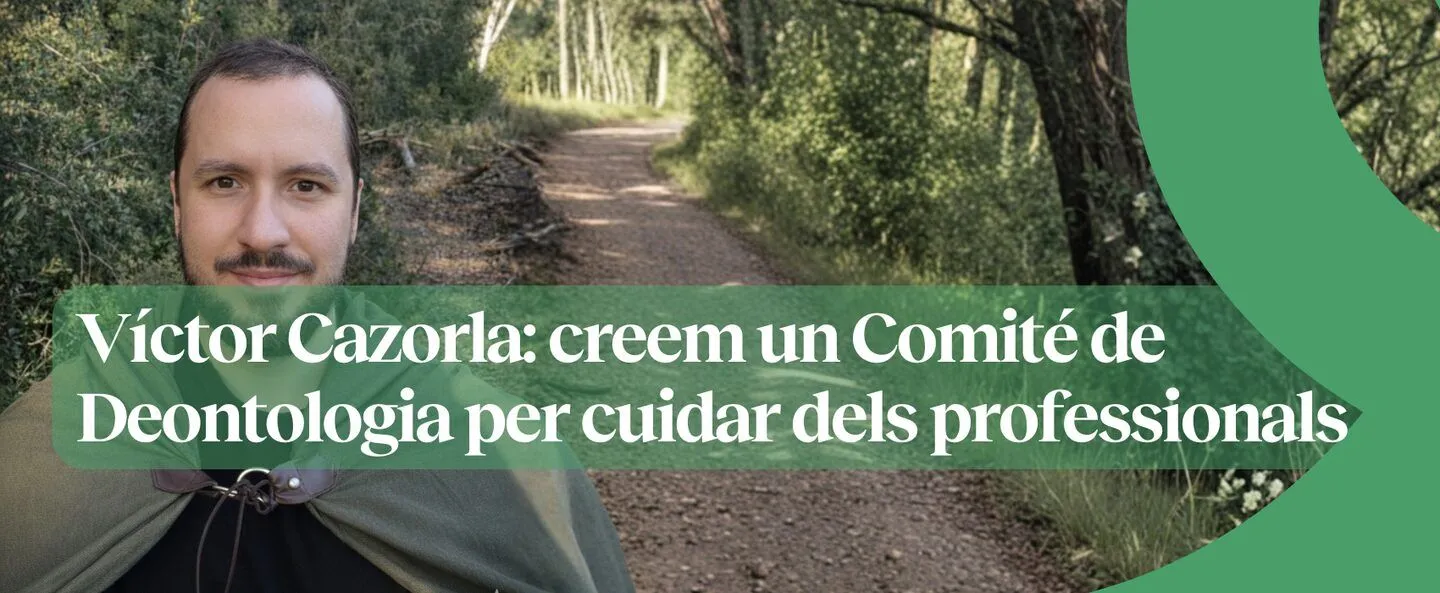
Caring for people is caring for the profession.
Interview published by the Col·legi d’Ambientòlegs de Catalunya (COAMB) about the creation of the Ethics and Deontology Committee, the role of professional ethics, and the need to provide professionals with protection mechanisms for complex conflicts in the exercise of the profession.
For academic inquiries on legal philosophy and normative logic, write to research@victorcazorla.com.